How Snow Plowing Works for Vacation & Second Homes
We recently helped a vacation homeowner set up plowing with trigger depths, storm plans, and protection for a brand-new driveway. Here’s how we handle it.
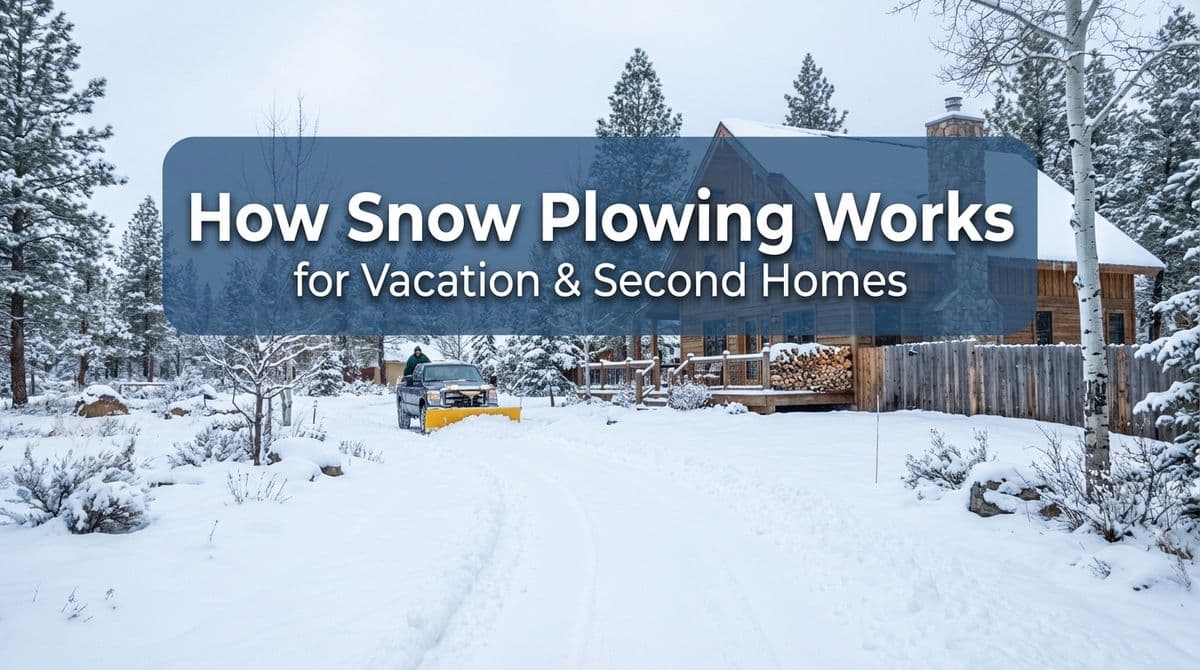
We recently got a call at our snow plowing office from a vacation homeowner — let’s call him Tom. Tom has a place in a lake community and lives several hours away. He told us, "I’m not there regularly, but we’ve got a newly paved driveway, a big storm on the way, and I’m worried about how this is going to work when I’m not around."
In our snow plowing business, that’s a conversation we have a lot with folks who own vacation and second homes. Tom wanted to know: Do I have to call every time? How much snow triggers a visit? Can you avoid salt on my new driveway? How do I know what you did and when?
Here’s how we walked Tom through everything on that call — and how we typically handle snow plowing for vacation and second homes like his.
Setting up service when you don’t live there full-time
The first thing we did with Tom was get him on our route before the storm hit. For vacation homes, that’s crucial. If you wait until the snow is already coming down, it’s harder to plan your driveway into safe and efficient plow routes.
When Tom mentioned he wasn’t up at his place very often, we knew he needed a plan that didn’t require him to call every time snow was in the forecast. That’s where trigger depths come in.
What is a trigger depth (and how we set it)?
Tom asked a question we hear all the time: "So if we get a certain amount of snow, you’re just going to go plow, right?" The short answer, for our customers, is yes — based on the trigger depth we agree on together.
A trigger depth is simply the amount of snow that has to fall before we automatically come out and plow, without you needing to call. For example:
1-inch trigger: Great if you’re there a lot, want a very clean driveway, or have limited mobility.
2-inch trigger: Our most common option. Balances cost and convenience.
3-inch trigger: Works for some vacation homes where the owner doesn’t mind a bit more snow between visits.
On Tom’s call, he was debating between 2" and 3" because he’s trying to get a snowblower up there and has a neighbor who can help with smaller accumulations. We walked him through the pros and cons, and in cases like his we often recommend a 2-inch trigger so longer storms don’t turn the driveway into packed ice.
We’re also honest about the gray area: if the forecast is calling for 2–3 inches and we’re seeing about 1½–2 inches on the ground, we’ll usually go ahead and plow to stay ahead of the storm. That’s safer for your driveway and for our equipment.
How we handle big storms: single vs. multiple passes
On the call, we told Tom the forecast was showing 15–20 inches. In storms like that, we don’t just wait until the very end and try to push it all at once — especially on a new driveway.
Instead, we plan for what we call "multiple pushes" during one storm:
Intermediate pass: We come through partway through the storm to knock down the bulk of the accumulation.
Final cleanup pass: After the storm wraps up, we come back to clear what’s left and clean things up.
With Tom, we explained that for a storm like the one coming, we’d likely plow his driveway twice. That keeps the weight of the snow from building up, reduces the risk of ruts and damage, and makes it easier for him to get in when he drives up midweek.
For vacation and second homes, this multi-pass approach is especially important. You’re not there to move vehicles around or shovel between bands of snow, so we plan ahead to keep the driveway usable and prevent it from turning into a solid sheet of compacted snow.
Protecting new driveways and paver areas
Tom was very clear about one thing: his driveway had just been newly paved, and there were patio blocks coming off the stairs. He didn’t want anything "beat up," and we don’t blame him. New asphalt and pavers need a little extra care.
Here’s how we typically protect surfaces like his:
No salt on brand-new asphalt: On Tom’s call, he specifically requested no salt on his new driveway. We agreed. For freshly paved drives, we usually avoid salt unless there’s a serious icing issue.
Plow blade technique: We keep the blade slightly off the surface and rely on the snowpack as a buffer, especially on brand-new asphalt or decorative pavers.
Marking sensitive areas: If you have pavers, steps, or retaining walls, we recommend marking them clearly with stakes so our operators can see exactly where to stop.
Notes in your account: In our system, we add notes like "new driveway" or "paver landing near steps" so every driver knows to be extra careful.
If you’ve recently had your driveway paved or added paver patios or walkways, let your plow company know up front. The more detail you give us, the more we can tailor how we plow and what products we use.
How remote owners stay in the loop (without calling every time)
One of Tom’s biggest concerns was, "Do I have to call, or will you just take care of it?" Our goal with vacation and second homes is to make things as hands-off as possible for you, while still keeping you informed.
Here’s how we handle that:
Automatic service by trigger depth: Once we agree on a trigger, you don’t need to call for every storm. If the snow meets the trigger, we plow.
Client portal access: You can log in from wherever you live to see when we plowed, what storms were serviced, and your invoices.
Two-way communication: If you want to leave special instructions ("I’m coming up Wednesday," "Skip this minor storm," etc.), you can drop a note in the portal.
For someone like Tom, who’s watching a Pennsylvania forecast from out of state, that peace of mind matters. He knows that when a storm hits, we’re already planning his driveway into our route based on the trigger we set together.
Tips if you own a vacation or second home
Whether you work with our team or another local company, here are a few simple steps to make snow season easier on your vacation property:
Set your trigger depth in writing so everyone’s clear on when plowing should happen.
Tell your plow company about new pavement or pavers and ask them to avoid salt if needed.
Ask how they handle big storms — do they plan multiple passes, or just one at the end?
Make sure you have a way to see service history, whether that’s a portal, emails, or text updates.
Coordinate with neighbors or a local contact if you have a snowblower or need the area around steps and walkways cleared by hand.
That’s essentially the roadmap we used with Tom: get him on our list, set a trigger depth that matched how often he visits, protect his new driveway, and keep him updated through our system. If you’ve got a vacation or second home and you’re not sure how snow plowing should work when you’re not there, those same steps will work for you too.