New Homeowner’s Guide to Seasonal Lawn & Snow Care
New to owning a yard? Learn how to go from first clean-up to year-round mowing, fertilizing, and snow services with a simple, seasonal lawn care plan.
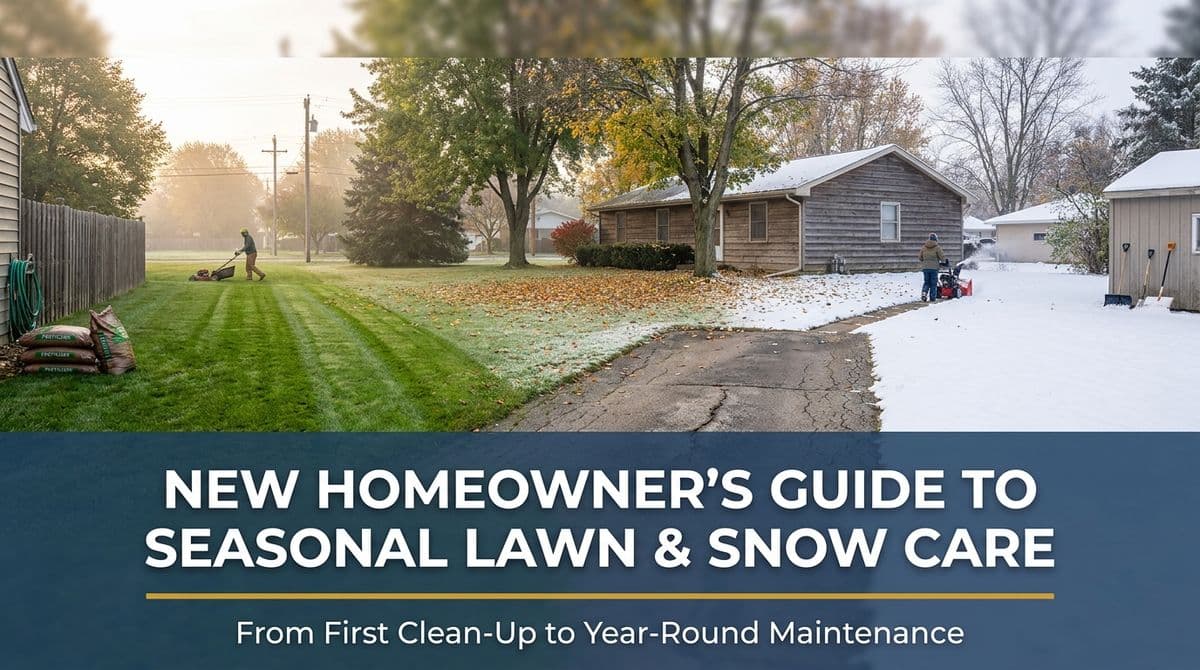
From First Call to First Cut: Welcoming a New Homeowner
We recently got a call from a new neighbor — let’s call him Mark — who had just bought his first home. One of his coworkers is already a client of ours, so she suggested he reach out about mowing and general clean-up.
Mark told us the previous company had been mowing every other week, and the yard was showing it. There were pine needles everywhere, beds needed attention, and he wasn’t sure what should come first: mowing, clean-up, fertilizing, or planning ahead for snow. He said, “I just want it cleaned up right the first time, then kept up all year. I don’t even know what I need yet — can you walk me through it?”
We hear that a lot from new homeowners, especially in their first full year in a house. So we figured we’d turn Mark’s questions into a simple, seasonal guide you can use too.
Step One: Your First Clean-Up After Moving In
Before we talk about mowing schedules or fertilizer, we almost always recommend a one-time deep clean-up for a new property. That’s exactly where we started with Mark.
Here’s what we typically tackle in that first visit:
- Leaf and needle removal: Pine needles and leaves smother grass and invite disease if they’re left in thick layers.
- Sticks, branches, and debris: Cleaning these up protects our mowers and keeps the lawn looking tidy.
- Bed edging and weeding: Redefining edges instantly makes a property look cared for.
- Light landscape fixes: For Mark, that meant installing some solar path lights properly so they wouldn’t get knocked over on the first mow.
Once that baseline clean-up is done, the rest of the year is about maintenance, not rescue. That’s where a seasonal plan comes in.
Spring: Waking Your Lawn Up the Right Way
Spring is when we set the tone for the entire growing season. With Mark, we scheduled his estimate and first visit in early spring so we could see exactly what we were working with.
Key spring lawn tasks we recommend
- Gentle raking: Remove leftover leaves and winter debris, but avoid aggressive raking that tears up new shoots.
- First mow of the season: We usually set mowers to around 3–3.5 inches to avoid scalping tender spring grass.
- Pre-emergent weed control: A spring application helps stop crabgrass and other annual weeds before they sprout.
- Light fertilizing: A balanced, slow-release fertilizer gives the lawn the nutrients it needs as it wakes up.
DIY tip: If you’re mowing yourself, never remove more than one-third of the grass blade at a time. If the lawn is very tall, plan on two cuts a few days apart rather than dropping the mower all the way down.
When to call in help: If your lawn feels spongy, has large bare patches, or is full of moss, it’s worth having a professional walk the property. Those are signs of deeper issues with drainage, thatch, or soil health.
Summer: Weekly Mowing and Smart Watering
Mark’s main question was how often we’d mow once things got growing. In our climate, we recommended weekly mowing through the heart of the season. Every-other-week mowing can leave the lawn shaggy, stress the grass, and create big clumps that smother the turf.
Summer mowing and care basics
- Mowing height: In summer, we usually cut at 3–4 inches. Taller grass shades the soil, conserves moisture, and chokes out some weeds.
- Sharp blades: Dull blades tear grass, leaving brown tips. If your lawn looks ragged right after mowing, it’s time to sharpen.
- Watering schedule: Aim for about 1 inch of water per week, including rain. Deep, infrequent watering encourages deep roots.
- Timing: Water early in the morning so grass dries during the day, reducing disease problems.
DIY tip: Use a simple rain gauge or even an empty tuna can to measure how much water your sprinklers are actually putting down in 15 minutes, then adjust your run times accordingly.
When to call in help: If you see widespread yellowing, brown circles, or areas that stay soggy, a quick professional visit can prevent small problems from turning into expensive repairs.
Fall: Clean-Up, Fertilizing, and Preparing for Winter
In our first conversation, Mark mentioned he wanted someone who could “do the chemicals during the year and handle snow in winter.” Fall is where those two ideas start to overlap: we’re still caring for the lawn, but we’re also preparing the property for cold weather and snowfall.
Fall lawn and landscape priorities
- Regular leaf removal: Letting thick layers of leaves sit on the grass is one of the quickest ways to kill it off over winter.
- Fall fertilizer: A fall application helps strengthen roots, so the lawn comes back thicker and greener in spring.
- Overseeding bare spots: Early fall is the best time to fill in thin areas so new grass can establish before winter.
- Final mowing adjustments: We gradually lower the mowing height slightly at the end of the season to reduce snow mold risk, but we never scalp the lawn.
DIY tip: If you’re raking yourself, consider mulching lighter leaf drops with your mower instead of bagging. Chopped leaves can break down and feed the soil, as long as they don’t form a mat.
When to call in help: If you’re overwhelmed by falling leaves, or if you’re not sure what kind of fertilizer or seed to use, a professional can customize a simple plan based on your lawn type and shade conditions.
Winter: Snow Services and Protecting Your Property
Mark asked about snow plowing during our very first call — and he’s right to think about it early. When snow comes, you want a plan in place, not a last-minute scramble.
What we focus on in winter
- Driveway and walkway clearing: Keeping access safe and passable for cars, deliveries, and visitors.
- Responsible de-icing: Choosing the right products for your surfaces and pets, and using them correctly to avoid damage.
- Protecting lawn edges: Knowing where the pavement ends and the grass begins helps us avoid plow damage.
- Marking hazards: We recommend marking sprinkler heads, curbs, or low lights that might be hidden under snow.
DIY tip: If you shovel yourself, push snow with the shovel instead of lifting when possible to protect your back, and avoid piling heavy snow right at the edge of the lawn where it will compact and damage the grass.
Putting It All Together: A Simple Year-Round Plan
When we finished talking through everything with Mark, we proposed a straightforward approach:
- One-time initial clean-up to reset the property.
- Weekly mowing during the growing season at a healthy height.
- Seasonal fertilizing and weed control tailored to his yard.
- Fall clean-ups to handle leaves and prep for winter.
- Optional snow services for driveways and walks in the winter months.
You don’t need to know every technical detail to have a great-looking lawn. You just need a clear seasonal rhythm and, when you want a hand, a team that can walk the property, tell you what’s needed first, and then step in as much or as little as you’d like.
If you’re a new homeowner staring out at a yard you didn’t choose and aren’t sure how to care for yet, we’re happy to do what we did for Mark: swing by, take a look, and lay out a step-by-step plan for year-round lawn and snow care.