Kidney Bean vs. Oval: Choosing the Best Landscape Bed Shape
Not sure if your landscape bed should be kidney bean, oval, curved, or straight? Learn how to pick the perfect shape for your home, plants, and maintenance style.
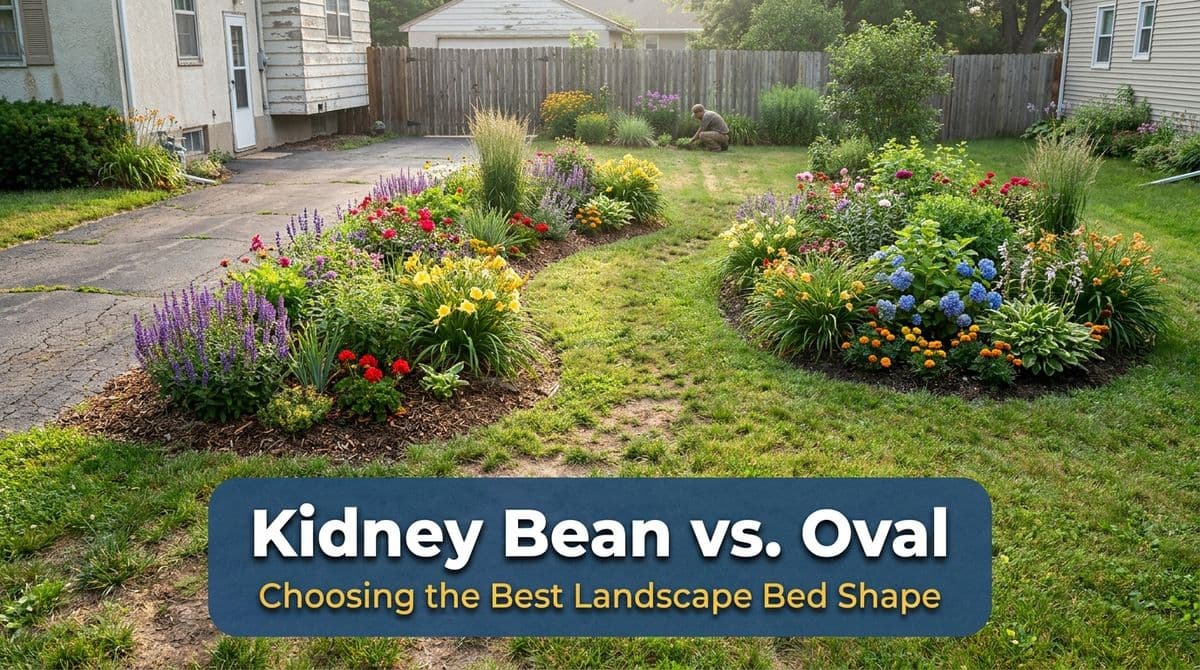
“Kidney Bean or Oval?” – A Real Conversation We Have All the Time
We recently got a call from a customer — let’s call her Linda — the day before we were scheduled to reshape one of her front landscape beds.
We had originally designed a soft kidney bean shape for her, but as she looked at the yard that evening, she started second-guessing herself. When she called, she said something a lot of homeowners tell us: "I just can’t make one more decision — but I think an oval might fit our property better long-term."
Nothing else about the job had changed — same plants, same tree, same mulch — she just wanted to tweak the shape of the bed. And that simple change raised a great question: How do you actually choose the best shape for your landscape bed?
Using Linda’s situation as a jumping-off point, we want to walk you through how we think about kidney bean, oval, curved, and straight-edged landscape beds so you can feel confident in your own yard decisions.
Start With the House and the View From the Street
When Linda called, she said, "With the way our property is shaped, I just think an oval would look better." That instinct was spot on, and it’s where we always start: how your house and yard are shaped.
Before locking in a bed shape, we look at:
- Architectural style – Modern or boxy homes often pair well with cleaner, straighter beds. Traditional or cottage-style homes love softer curves.
- Driveway and walkway lines – We don’t want a bed that visually fights your concrete or paver lines; it should echo or gracefully contrast them.
- How you see the bed – From the street? Front porch? Living room window? The main viewing angle should feel balanced and intentional.
In Linda’s case, the front of the home and the lawn created more of a broad, gentle arc. An oval bed echoed those lines better than a tighter kidney bean curve, so it made sense that she was “feeling” the oval more.
Kidney Bean vs. Oval: What’s the Real Difference?
To most people, a kidney bean and an oval both just look “curved,” but on-site they behave a bit differently.
Kidney Bean Beds
Kidney-shaped beds have an inward scoop on one side, which creates a natural focal point and a sense of movement.
Best when you want:
- A defined “front” and “back” to the bed
- A place to tuck a feature plant or boulder into the inward curve
- To soften a corner of the house or a sharp lawn angle
These shapes can be great for wrapping a corner of the house or creating a more dynamic feel in a flat, square yard.
Oval Beds
Oval beds are more symmetrical and feel calmer and more formal. When Linda asked if we could "just be more of like an oval cut," she was really asking for something that felt simpler and cleaner.
Best when you want:
- A bed that looks balanced from multiple directions
- A calmer, more formal look in the front yard
- To center a tree or feature plant without it looking forced
We can still offset a tree to one end of an oval for a more natural look or center it for a classic, symmetrical focal point. With Linda, we talked through both options and let the existing house windows and front door placement guide where that tree should land.
Curved vs. Straight Designs: Matching the Lines of Your Home
Beyond kidney vs. oval, the bigger decision is really curved vs. straight beds.
Curved Beds
Curved beds (including kidney and oval) are usually more forgiving and natural-looking.
We recommend curves when:
- Your house has a lot of hard lines and you want to soften them
- Your yard slopes or rolls and you want the bed to flow with the land
- You prefer a relaxed, organic feel over a formal one
Straight or Geometric Beds
Straight-edged beds — rectangles, long strips, and strong angles — can look fantastic when used in the right setting.
We recommend straighter beds when:
- Your home is very modern or has strong geometric features
- You’re bordering a patio, driveway, or walkway and want a crisp, clean edge
- You like low-maintenance mowing with long, straight passes
Sometimes we’ll combine both: a straight edge along the sidewalk for easy trimming, with a gentle curve on the lawn side to keep things soft.
How Bed Shape Affects Plants, Maintenance, and Drainage
Shape isn’t just about looks — it changes how the bed works.
Plant Layout
In a kidney bean bed, that inward curve is a natural spot for a taller shrub, ornamental grass, or focal boulder. The narrower ends can hold smaller shrubs or perennials.
In an oval bed, we often:
- Place a tree or taller shrub slightly off-center for a natural look
- Ring it with medium shrubs
- Use low perennials or groundcover at the edge for a soft transition to lawn
Maintenance and Mowing
Smoother curves and simple ovals are usually easier to mow around than tight, wiggly shapes. With Linda, part of our discussion was making sure the new shape would still allow her to mow in wide arcs without a lot of back-and-forth trimming.
Drainage and Soil
Curved beds can be used to redirect water gently across the yard. We’re always looking at where water currently flows so we don’t accidentally create low spots where mulch and soil will wash out.
If we see water pooling near the house, we may adjust the bed line or slightly raise part of the bed to move water away from the foundation.
Common Mistakes Homeowners Make With Bed Shape
Over the years, we’ve seen a few patterns repeat themselves when people try to design bed shapes on their own.
- Too many tight wiggles. Little “squiggles” may look fun on paper but are a pain to mow and edge. Simple, broad curves almost always look better and are easier to live with.
- Ignoring the house lines. A wildly curvy bed in front of a very formal, straight-lined home can feel out of place. The bed should complement, not compete with, the structure.
- Making beds too small. Beds that hug the foundation by only a foot or two leave no room for plants to mature and end up looking cramped. Giving the bed a bit more depth lets plants breathe and creates a nicer profile from the street.
How to Decide When You’re Feeling “Decision Fatigue”
Linda joked on the phone that she was just in a season of life where she “couldn’t make any more decisions.” We hear that a lot, and it’s exactly why we like to walk customers through a few simple questions:
- Do you want the yard to feel formal and clean, or soft and natural?
- Where will you look at this bed most often — from the street, the porch, or inside?
- Is easy mowing and edging a top priority?
If you’re second-guessing a shape even before we start digging, that’s usually a sign we should revisit it. Just like with Linda, we’re always happy to adjust from a kidney bean to an oval, straighten a line, or soften a curve so you feel good about it for years to come.
Need Help Choosing the Right Bed Shape?
You don’t have to figure all of this out alone. When we come out for an estimate, we’re not just dropping numbers — we’re looking at your home, your property lines, how you use the space, and the overall feel you’re after.
If you’re torn between kidney bean, oval, curved, or straight designs, we’ll sketch a few options, talk through pros and cons, and help you land on a shape that fits your home and your life — so you’re not left staring out the window, second-guessing the outline of your mulch bed.