How to Fix Poor Soil & Patchy New-Build Lawns: Topdressing or Sod
Struggling with a patchy lawn in a new-build home? Learn whether topdressing or sod is the better fix for poor soil and thin grass in new developments.
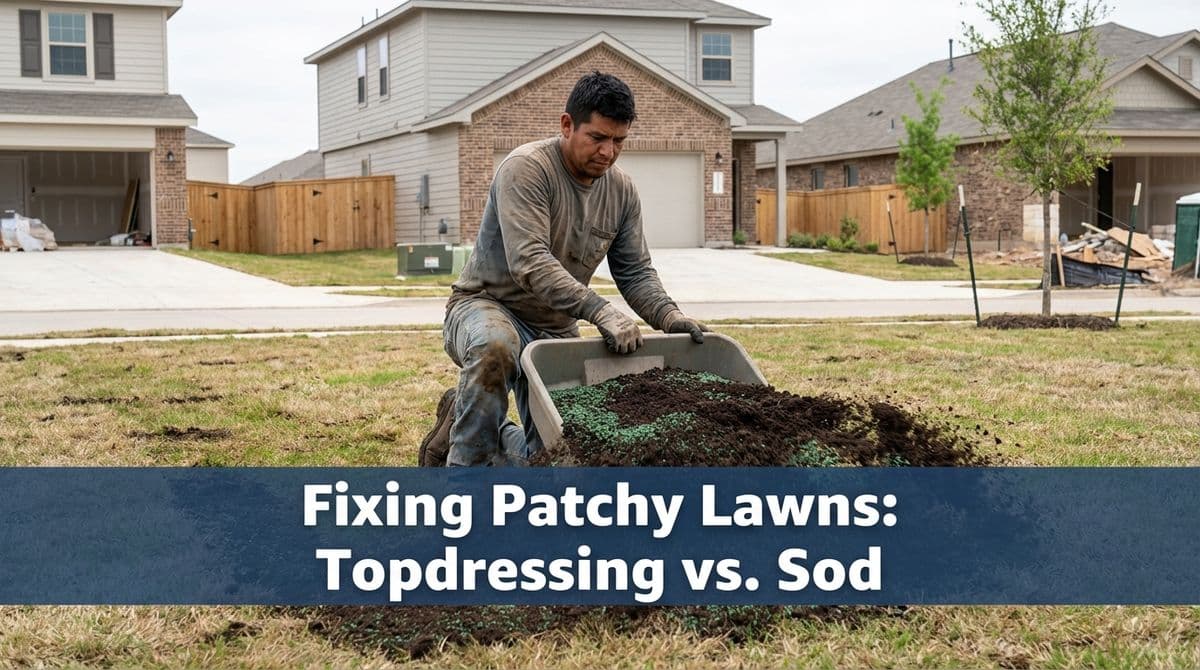
New-Build Home, Patchy Lawn: What’s Really Going On?
We recently got a call from a homeowner — let’s call him Mike — who had just moved into a new-build home in a growing development. He told us he’d seen one of our trucks working on his neighbor’s yard in Easton and decided it was time to get some answers about his own lawn.
Mike’s grass was “growing decently in most areas,” but he was still frustrated. When he walked the yard, he could see pebble-sized rocks and hard, compacted soil showing through in the thinner spots. His fertilizing company had done an okay job, but they’d also dropped a truth bomb: in many new developments, the builder strips and sells off the good topsoil before construction even starts.
By the time you get the keys to your “brand new” home, your lawn may be trying to grow on subsoil, construction debris, and whatever thin layer of soil was thrown back on top. That’s exactly what Mike was dealing with.
Why New-Build Lawns Struggle From Day One
As Mike and his neighbor had already figured out, there’s a common pattern in large developments:
- The builder strips off the rich topsoil before building.
- That topsoil is often sold or reused elsewhere.
- After construction, a thin layer of lower-quality soil is spread and seeded.
We’ve seen lawns where, just like Mike’s, you can dig a few inches and hit rocks, clay, or even boulders. Grass can survive in that for a while, especially with fertilizer, but it will rarely look thick and lush.
That’s why so many new homeowners ask the same question Mike did: “Do we need to put down new topsoil? Or should we just rip it all out and put down sod?”
Topdressing: The Quiet Fix Developers Don’t Mention
When Mike asked if we handle topsoil, we told him we do — but not in the way a lot of people picture it. We’re not showing up with huge piles of dirt to bury the yard. What we recommended for him (and most new-build lawns like his) is called topdressing.
Topdressing is simply spreading a thin layer of quality topsoil or compost blend over your existing lawn. Instead of starting over, we help your current grass grow stronger roots into better material.
How Topdressing Works
Here’s the basic process we walk through with homeowners like Mike:
- Evaluate the yard – We come out, walk the property, note thin spots, low spots, and compacted areas.
- Choose the right mix – Usually a screened topsoil or compost/soil blend that drains well and feeds the grass.
- Spread a thin layer – Typically about 1/4"–1/2" deep over the entire lawn, with a bit more in the worst areas.
- Work it into the turf – We rake or drag it so the soil settles down around the grass crowns instead of burying them.
- Seed and fertilize if needed – In thin or bare patches, we’ll overseed to take full advantage of the new growing medium.
Over time, as the grass grows and you mow, clippings decompose and mix with the new topdressing. That slowly builds up a healthier layer of topsoil right where the roots live.
Sod: The Fast (But Expensive) Reset Button
During our call, we also told Mike what a lot of his neighbors had already done: they just put down sod. It’s the quick, dramatic fix — one day the yard is patchy and rocky, the next day it looks like a golf course.
Sod definitely has its place, but we make sure homeowners understand both sides before they commit.
Pros and Cons of Sod for New-Build Lawns
Pros:
- Instant curb appeal – The lawn looks finished right away.
- Immediate coverage – Great for erosion control on slopes or bare dirt.
- Fewer weeds at first – Sod is usually established turf with minimal weeds.
Cons:
- Higher up-front cost – As Mike put it, it can be “very expensive,” especially on larger lots.
- Doesn’t fix deep soil issues by itself – If the builder left you with rock and hardpan just below the surface, laying sod right on top is like putting new carpet on a cracked foundation.
- Needs careful watering – Under- or over-watering can cause the sod not to root properly.
When we see a yard that’s truly beyond saving — severe grading issues, major compaction, or heavy construction damage — sod after proper soil prep can absolutely be the right move. But for many new-build lawns, topdressing gives better long-term value.
Topdressing vs. Sod: Which Is Right for Your New Build?
When we meet homeowners like Mike, we usually walk through a few key questions:
- How bad is the existing lawn? – If you have at least 50–60% decent grass coverage, topdressing plus overseeding can work wonders.
- What’s under the surface? – If you’re constantly hitting rocks or finding large debris, we may need targeted soil repair in those areas.
- What’s your budget? – Topdressing is typically more affordable than stripping and sodding an entire yard.
- How fast do you need results? – Sod wins for instant looks; topdressing wins for gradual, soil-deep improvement.
In Mike’s case, we discussed topdressing the whole yard, focusing extra attention on the patchiest, rockiest zones. That approach lets his existing grass thicken up, improves the soil slowly but surely, and doesn’t blow the budget like full sod would.
Simple Steps You Can Take Before We Even Visit
If you’re in a new-build home and your lawn looks a lot like Mike’s, here are a few things you can do right now:
- Walk the yard – Note spots where you see bare soil, rocks, or thin, wispy grass.
- Check for compaction – If you struggle to push a screwdriver into the soil, you likely need aeration and topdressing.
- Take photos – Wide shots and close-ups help us understand what you’re seeing before we arrive.
- Ask neighbors – If they’re dealing with the same issues, sometimes we can plan a group project and save everyone time and money.
From there, we can come out, look things over, and give you an honest recommendation — whether that’s topdressing, targeted soil repair, overseeding, or, in some cases, new sod with proper prep.
Ready to Give Your New-Build Lawn a Real Foundation?
Developers don’t always tell you what they did to the soil before you moved in, but your lawn will eventually reveal it. If you’re tired of seeing rocks, thin patches, and stubborn spots that never quite fill in, you’re not alone — we help homeowners like Mike with this every season.
If you’d like us to take a look at your yard, we can schedule a visit, walk the property with you, and lay out a clear plan to turn that builder-grade lawn into something you’re proud of — starting with the soil.