Final Grading After a New Pool Installation
Just finished a new pool? Here’s why final grading matters, what’s involved, and how to prep your yard so it drains well and looks great for years.
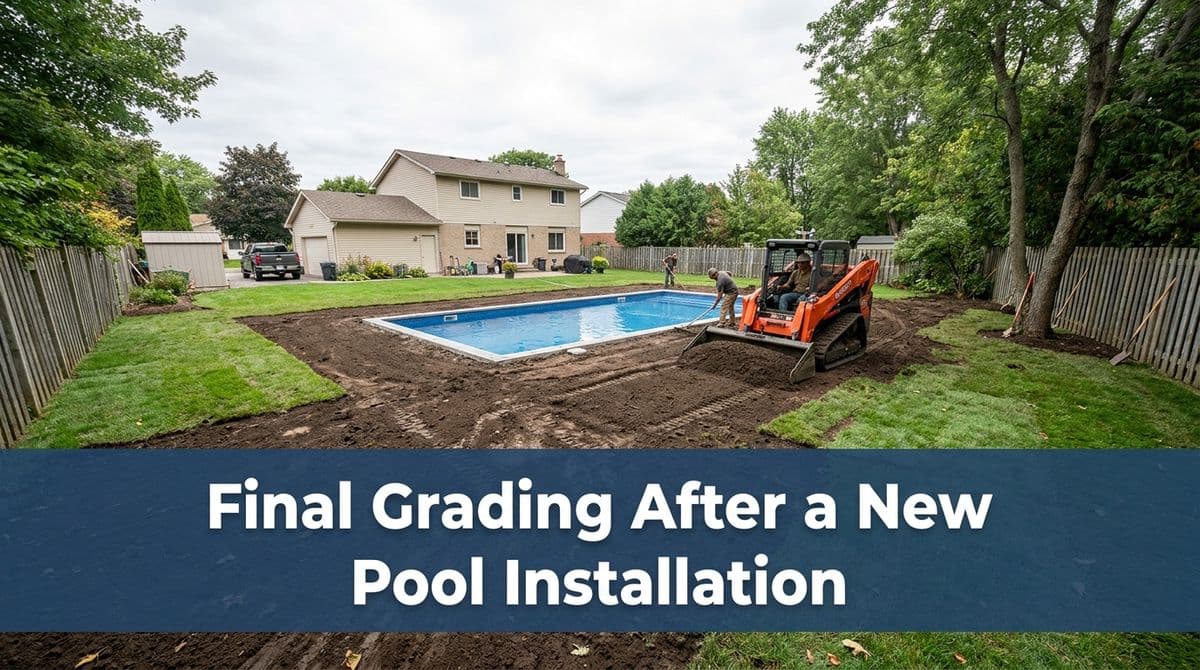
Final Grading After a New Pool: What We Tell Our Customers
We recently got a call from a homeowner — let’s call her Jenny — who had just finished a new pool installation. The shell was in, the concrete was poured, and the equipment was running. But her yard looked like a construction zone: dirt piles, uneven ruts, and low spots around the pool where water was already starting to sit.
Jenny asked us the same question we hear every pool season: “Can you do the final grading around our pool and level out the rest of the yard? What does that actually involve?” We walked her through the process on the phone, and we thought it would be helpful to share the same explanation here for anyone planning a new pool.
What Is Final Grading After a Pool Install?
When a pool company finishes their work, they typically leave what we’d call a “construction grade.” They’ve backfilled the hole, but they’re not thinking about your lawn, future landscaping, or long-term drainage the way a landscape contractor does.
Final grading is the step where we reshape and smooth the soil around the pool and across the disturbed parts of your yard so that:
- Water flows away from the pool and your house
- The yard is safe to walk on (no ankle-twisting ruts or holes)
- The surface is ready for sod, seed, rock, or planting beds
- The finished yard looks intentional instead of “afterthought construction”
Think of final grading as the bridge between “construction site” and “finished backyard.” Without it, you’ll battle mud, pooling water, and uneven turf for years.
Why Proper Grading Around a Pool Really Matters
When we met Jenny on site, we could already see a few problem spots forming. Left alone, those spots would have turned into bigger issues. Here’s why final grading is so important around a new pool:
- Drainage protection: Water should always move away from your pool and your home’s foundation. Poor grading can send water toward your house, causing basement or crawlspace moisture issues.
- Pool structure and deck protection: Standing water near the pool can soften soil and contribute to settling around the deck, creating cracks or trip hazards over time.
- Usable yard space: Without proper slopes, you end up with soggy, unusable lawn or bare, eroding dirt patches.
- Erosion control: Heavy rains will wash ungraded soil into your pool, onto your deck, and across your lawn, making a big mess and clogging filters and drains.
Done right, final grading sets you up for a dry, solid, easy-to-maintain outdoor space that actually matches the investment you’ve made in your new pool.
What’s Involved in Final Grading After a Pool
When we come out for a grading estimate like Jenny requested, we walk the entire property, not just the immediate pool area. Here’s what our process typically involves:
1. Assessing Slopes and Drainage
We start by looking at how water should move across your yard. We check:
- The slope away from the pool and house (we want a gentle, consistent fall)
- Low spots where water already collects
- Downspouts, existing drains, and neighboring properties
If needed, we’ll recommend minor adjustments like shallow swales (subtle channels) to carry water to a safe discharge point or tie-ins to existing drainage.
2. Shaping and Smoothing the Soil
Next, we bring in equipment — usually skid steers and grading rakes — to:
- Redistribute high spots and fill in low areas
- Create the proper pitch away from structures
- Blend the pool area back into the rest of the yard so it feels natural
Once the rough shape is right, we fine-grade the soil so it’s smooth and ready for sod, seed, rock, or mulch.
3. Preparing for Lawn or Landscaping
We always ask homeowners what the plan is after grading. For example, Jenny wanted lawn around most of the pool with some future landscape beds. That guided how we finished the surface:
- For sod: We aim for a firm, level soil about 1 inch below hard surfaces (like pool deck or patio) so new sod sits flush.
- For seeding: We leave a slightly roughened surface so seed can grab and establish roots.
- For rock/mulch beds: We create a subtle lip or edge to help contain materials.
How Soil Type Affects Grading Around Your Pool
One thing we explained to Jenny — and to many homeowners — is that your soil type plays a big role in how we grade and how your yard behaves afterward.
- Clay soils: These hold water and drain slowly. We usually recommend slightly more pronounced slopes and are extra careful to avoid any depressions where water can sit. Compaction is already high in clay, so we focus on creating smooth, consistent pitches.
- Sandy soils: These drain quickly but can be prone to erosion. Around pools in sandy yards, we may suggest soil amendments or stabilization (like sod or groundcover) sooner rather than later to keep material from washing away.
- Mixed/filled soils: Many pool installs involve imported fill. We make sure that fill is properly shaped and that any transitions between native soil and fill are graded smoothly to minimize future settling.
Understanding your soil helps us set expectations: how fast the yard will firm up, where erosion risks are, and how aggressively we need to manage drainage.
Common Grading Mistakes Around New Pools
When we’re called in to “fix” a yard that was graded poorly after a pool install, we tend to see the same issues over and over. Here are a few to watch out for:
- Flat or back-pitched areas: Sections that are dead flat or sloping toward the pool or house. These almost always end up as muddy or wet zones.
- Too much soil against the pool deck: Piling soil high against concrete can create mulch or soil “dams” that trap water and stain or damage hard surfaces.
- No thought for future landscaping: Grading right up to the pool edge with no allowance for beds, edging, or pathways can limit your design options later.
- Ignoring access paths: Not creating a level-enough path for mowers or wheelbarrows can make maintenance frustrating.
Working with a landscaper who understands both aesthetics and drainage helps you avoid these expensive do-overs.
How to Prepare Your Yard Before We Arrive
Jenny asked what she should do before our crew came out. A little prep on your end makes the visit smoother and often saves time on site:
- Clear the work area: Move portable items like furniture, toys, hoses, and temporary fencing away from the pool area and yard sections we’ll be grading.
- Mark what matters: Flag any underground dog fences, irrigation heads, or septic components you know about. If you have property pins visible, that’s a bonus.
- Decide on priorities: Think about where you need lawn, where you might want beds or rock, and any future patios or sheds. Share those ideas with us so we can grade accordingly.
- Plan vehicle access: Our equipment needs a way in and out. If gates need to be opened or temporary sections of fence removed, it’s good to know that ahead of time.
Quick FAQs About Final Grading After a Pool
How long does final grading usually take?
For a typical residential pool project and the surrounding disturbed yard, most grading jobs take one full day, sometimes stretching into a second day if the lot is large or drainage work is more involved.
What weather is best for grading?
We prefer dry or slightly damp conditions. Very wet soil turns into mud and doesn’t compact or shape well; extremely dry soil can be dusty and crumbly. If there’s been heavy rain, we may recommend waiting a day or two.
How soon after grading can we install sod or seed?
In many cases, sod can go down immediately after final grading if you’re ready. For seed, the same day or within a few days is ideal so the surface doesn’t crust or erode before planting.
Wrapping Up: Turning a Construction Site Into a Backyard
When we finished Jenny’s project, the difference was dramatic. The pool stayed the star of the show, but now the entire yard worked with it instead of against it — water flowed where it should, the lawn areas were level and usable, and the space was ready for fencing and landscaping whenever she was.
If you’ve just had a pool installed and you’re staring at rough dirt and ruts, that’s exactly the stage where final grading makes all the difference. We’re always happy to come out, walk the property with you, and put together a plan to get your yard ready for the next step.