Choosing the Right Mulch: Dyed vs. Natural Hemlock & Quantity Guide
Not sure whether to choose dyed mulch or natural hemlock—or how many yards you actually need? Learn how to pick the right mulch and calculate the right amount.
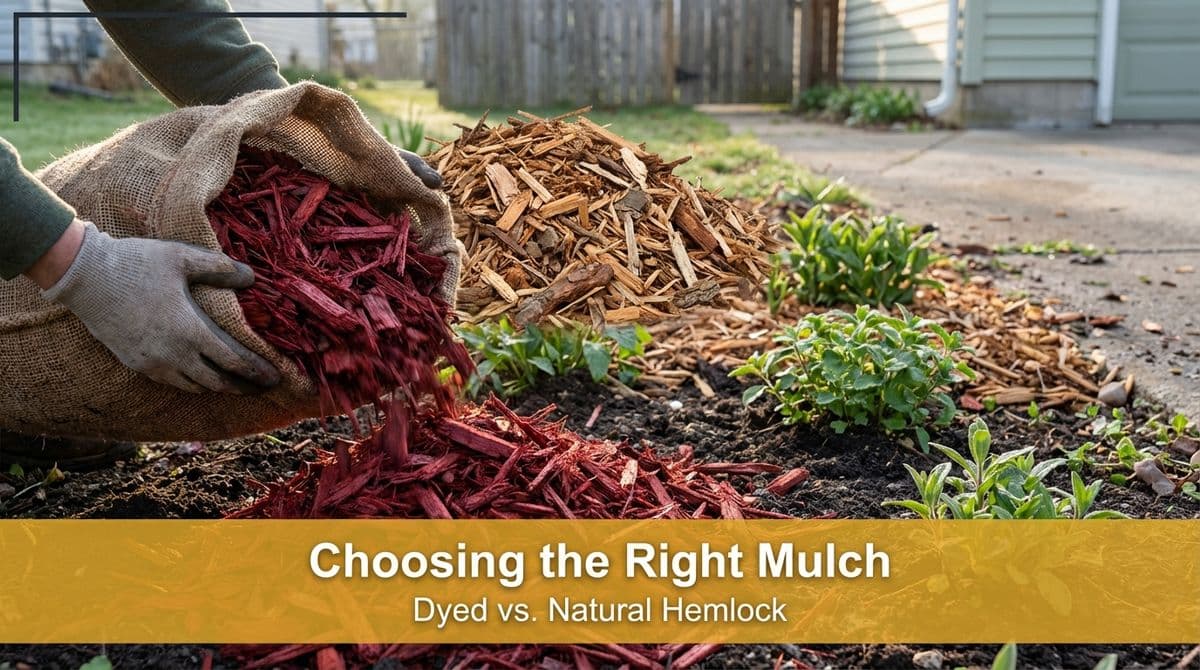
How One Mulch Question Turned Into a Great Conversation
We recently got a call from a homeowner – let’s call him Brian – who wanted to order four yards of mulch delivered to his place. The connection was a little scratchy, so we were repeating ourselves a bit, but one thing came through loud and clear: he knew exactly what he was looking for.
“Do you have undyed hemlock?” he asked.
That’s a more specific request than we usually hear. Most folks call asking for “the black stuff” or “the red mulch,” or just “whatever you recommend.” Brian’s question is what inspired this guide, because it’s the same decision most homeowners face every spring:
- Should I choose dyed mulch or natural mulch?
- Is hemlock mulch really better?
- And how do I figure out how many yards I actually need so I’m not short… or stuck with a mountain of extra?
Let’s walk through how we talked Brian through those questions – and how you can make the right choice for your own yard.
Dyed Mulch vs. Natural Mulch: What’s the Real Difference?
When Brian first asked about our mulch types, we started with the basics: we typically carry popular dyed mulches like black and red, and then a range of natural, undyed mulches like hemlock and hardwoods.
Dyed Mulch (Black, Brown, Red, etc.)
Pros:
- Bold color that lasts: Dyed mulches keep their color longer than many natural mulches. Black and dark brown in particular look sharp around foundation plantings and modern homes.
- Instant curb appeal: Freshly spread black or red mulch gives beds a very “finished,” landscaped look.
- Slower to fade: High-quality mulch dyes can hold color for a full season or more, depending on sun exposure.
Cons:
- Color is artificial: Even when the dye is non-toxic and safe (as reputable suppliers use), some homeowners simply prefer a completely natural look and material.
- Potential for leaching with cheap products: Lower-quality, bargain dyed mulches can be made from ground pallets or construction debris, and may include contaminants. That’s why it’s important to buy from a trusted supplier.
- Hotter in sun: Dark dyed mulches can absorb more heat, which is fine for many ornamentals, but not always ideal in extreme sun for shallow-rooted plants.
Natural Mulch (Including Undyed Hemlock)
On the other side are the natural, undyed mulches – what Brian was asking about.
Pros:
- Completely natural: No added colorants. Just wood or bark, chipped or shredded.
- Great for soil health: As it breaks down, natural mulch improves soil structure and adds organic matter.
- Soft, woodland look: Natural mulches blend into the landscape, especially in wooded or rustic settings.
Cons:
- Fades faster: Sun and rain will turn most natural mulches a soft gray or brown relatively quickly.
- May need top-ups more often: Because they decompose, you usually refresh natural mulches yearly for the best look and performance.
What Makes Undyed Hemlock Mulch Special?
When Brian specifically requested undyed hemlock, we knew he cared about both appearance and plant health. Hemlock is a popular choice among homeowners who want a premium natural mulch.
Benefits of Hemlock Mulch
Color & texture:
- Fresh hemlock has a rich, warm reddish-brown tone that many people love – it gives some of the visual punch of dyed mulch without actually being dyed.
- Its texture is usually fine to medium, which knits together nicely and stays put better than very chunky mulch.
Performance:
- Excellent weed suppression when applied at the right thickness.
- Good moisture retention, helping keep plant roots cooler and more evenly watered.
- Slow, steady breakdown that improves organic matter in the soil over time.
If you’re like Brian and want a natural, undyed look with a bit more richness than plain wood chips, hemlock is a great option, especially around shrubs, perennials, and woodland-style beds.
How Much Mulch Do You Really Need? (The 4-Yard Question)
Brian came to us with a specific number in mind: four yards. A lot of homeowners aren’t as sure, and it’s easy to underestimate or over-order. Here’s the simple math we walk people through on calls.
Step 1: Measure Your Beds
Grab a tape measure and break your beds into rough rectangles or circles. For each area, note:
- Length (in feet)
- Width (in feet)
Multiply length × width to get the square footage of each bed, then add all the areas together.
Example: If you have two beds that are 10' × 15' and 8' × 20':
- 10 × 15 = 150 sq ft
- 8 × 20 = 160 sq ft
- Total = 310 sq ft
Step 2: Choose Your Mulch Depth
For most beds, we recommend:
- New beds or heavy weed pressure: 3 inches
- Refreshing existing mulch: 1.5–2 inches
Step 3: Convert to Cubic Yards
Bulk mulch is sold by the cubic yard. One cubic yard covers approximately:
- About 324 sq ft at 1 inch deep
- About 162 sq ft at 2 inches deep
- About 108 sq ft at 3 inches deep
An easy rule of thumb: at a typical 2–3 inch depth, 1 yard of mulch covers roughly 100–150 square feet.
Quick estimate formula:
- Total square feet × desired depth (in inches) ÷ 324 = cubic yards
So if Brian’s beds total about 400 sq ft and he wants 3 inches of hemlock:
- 400 × 3 ÷ 324 ≈ 3.7 yards → round up to 4 yards
That’s exactly the kind of situation where ordering four yards makes sense.
How to Choose the Right Mulch for Your Yard
When homeowners call us like Brian did, here’s what we usually ask to help narrow it down:
- What’s your top priority? Strong color and curb appeal, or a natural woodland look and soil health?
- What’s planted in the beds? Foundation shrubs, perennials, vegetables, or a mix?
- How sunny are the beds? Full sun tends to fade color faster, which may push you toward darker dyed mulches or hemlock.
- How often do you refresh mulch? If it’s yearly, natural mulches are great. If you’d rather not touch it often, a darker dyed mulch may hold its look longer.
In general:
- Choose dyed black or brown for formal beds, foundation plantings, and big curb appeal.
- Choose natural undyed hemlock for a premium, rich, but still natural look with great soil benefits.
- Choose other natural mulches (like hardwood) for wooded lots, side yards, or anywhere you want a simple, low-key look.
Need Help Figuring Out Your Mulch Order?
If you’re standing in your driveway wondering whether you need two yards or four, you’re not alone. When Brian called, the first step was just clarifying what he wanted and where it was going so we could confirm the right product and amount.
If you give us your bed measurements, preferred depth, and whether you want dyed or natural (like undyed hemlock), we’re happy to do the math with you and recommend the best option for your property.
That way, you get the right mulch, in the right amount – and your yard looks like it just stepped out of a landscaping magazine.